Decorating with Lemons for a Summer Garden Party
I’m in love with lemons. I have been since I was a girl. We lived in Cape Town, South Africa for 3 years, moving there when I was 10. We had a lemon tree in the garden and as child I was fascinated to watch the lemon tree blossom, lemons start growing, and us eventually picking and using them. For a child from Canada this was magic!
I love the bright yellow color and feel of lemons – they signify summer and sunshine. I have a lovely dress with lemons on it, elegant black shorts with lemons on them. I have lemon placemats, serving dishes. I’m not obsessed. I just find that I have some items with lemons.
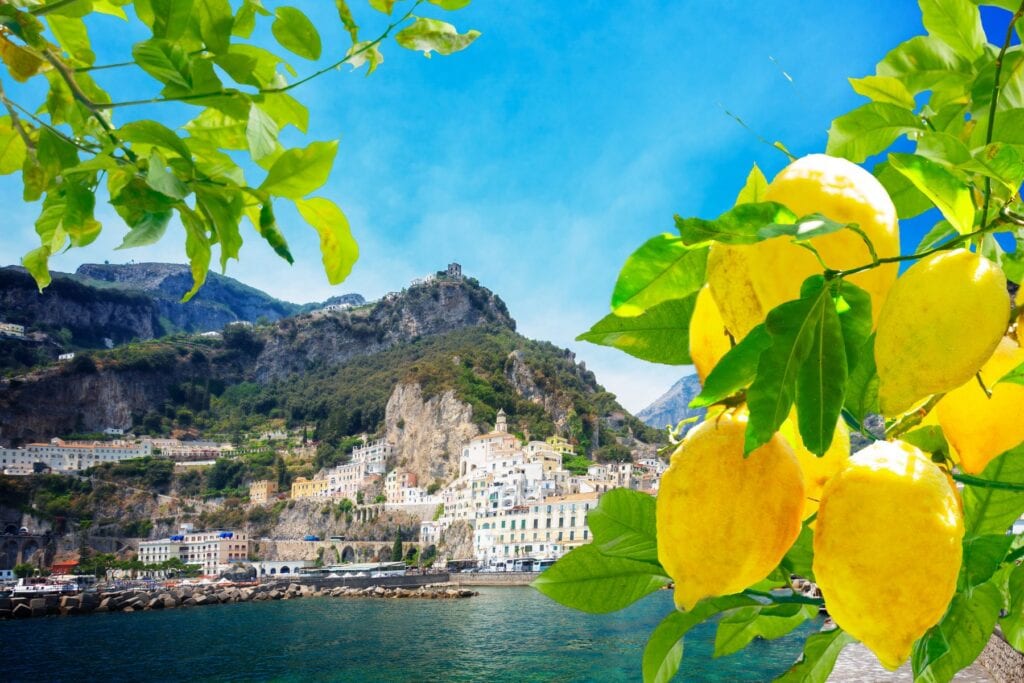
Amalfi Coast Theme
That’s probably why this current fascination – obsession – with the Amalfi coast colors of blue and yellow with lemons is so dear to me. It inspired me to think about how I could incorporate lemons into a dinner party. I’ll be honest, it doesn’t take much for me to want to theme my dinners, lol.
You can see a couple of examples with English Garden Tea Party and the Hydrangea Party.
The Fascinating History of Lemons
Lemons have a surprisingly long and well-traveled history. They are thought to have originated in Asia, likely in the region of northeast India, northern Myanmar and China, before gradually making their way west along ancient trade routes.
By Roman times, lemons had reached the Mediterranean, although they were still rare and expensive. Their bright color, fragrance and relative scarcity meant they were valued as much for their beauty and scent as for eating. Over the centuries, lemon cultivation spread throughout the Mediterranean, particularly under Arab influence, eventually becoming firmly associated with places such as southern Italy.
Lemons, Luxury and the European Garden
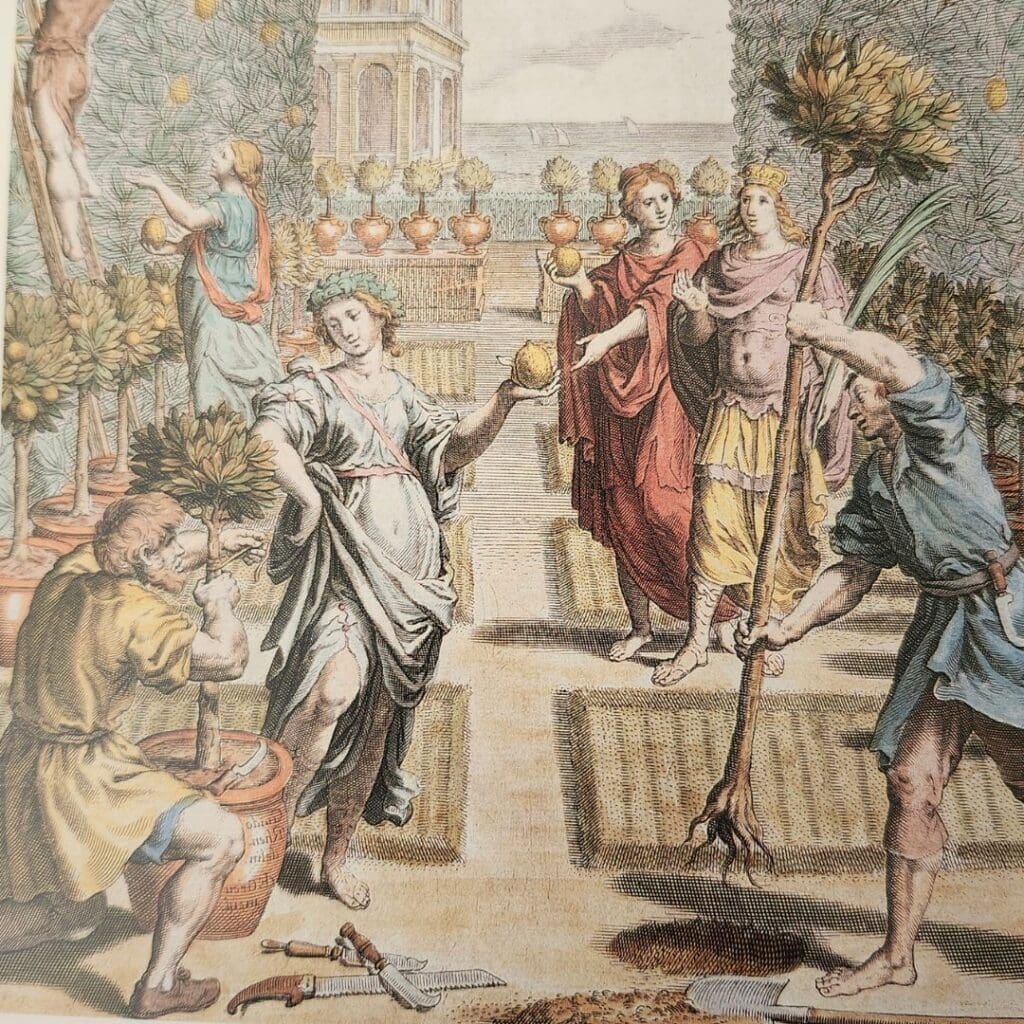
During the Renaissance and later centuries, citrus trees became symbols of wealth and status in European gardens. Wealthy families grew lemons and other citrus in pots and protected them during the winter in specially designed orangeries. Lemons weren’t simply food—they were decorative objects, garden features and a way of displaying prosperity.
Giovanni Battista Ferrari’s Hesperides sive de Malorum Aureorum cultura et usu was published in Rome in 1646 and is regarded as the first scholarly work devoted to oranges, limes, lemons and their varieties.
I’ve visited historic European estates where the original orangeries still stand—a reminder that growing citrus was once a luxury reserved largely for the wealthy.
Lemons, Sailors and Scurvy
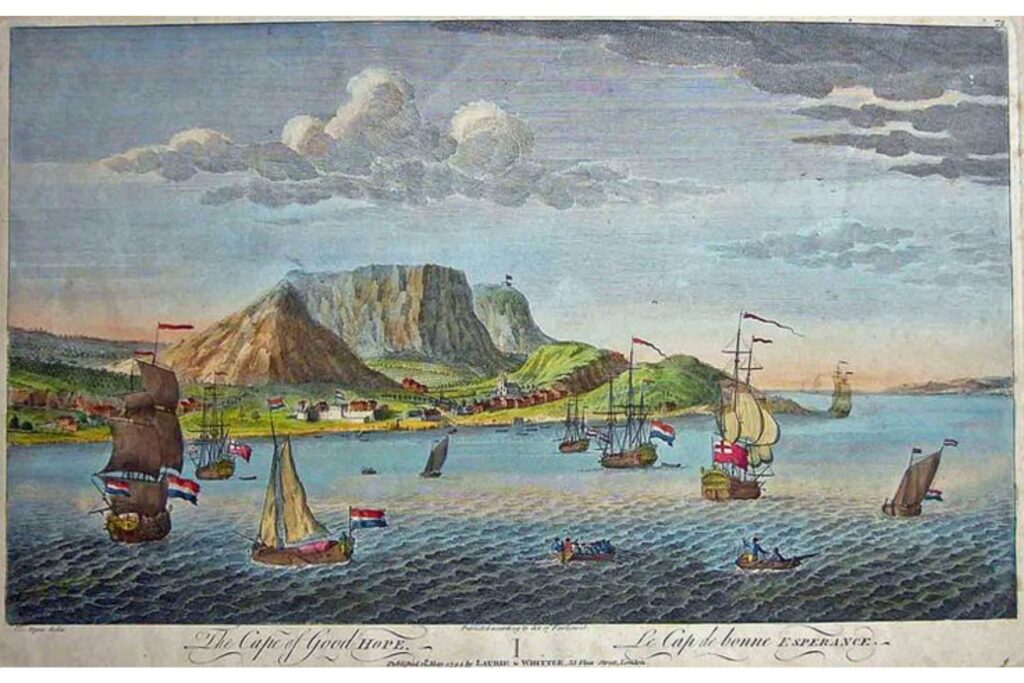
Lemons also became important to sailors. By the 18th century, citrus fruit was increasingly recognized as a way to prevent scurvy on long sea voyages, although limes later became particularly associated with the British Royal Navy.
The Cape of Good Hope, Cape Town, South Africa, was an important stopping point for ships travelling to the east as they were able to pick up citrus fruit and other provisions on their way.
A Book I’m Loving
Today, lemons are inseparable from Mediterranean cooking and decorating. Bowls piled with fresh lemons, citrus-patterned ceramics, yellow-and-blue textiles and lemon trees evoke the sunny landscapes of Italy and the Mediterranean—which may help explain why lemons continue to turn up in everything from tableware to fabrics and summer decor.
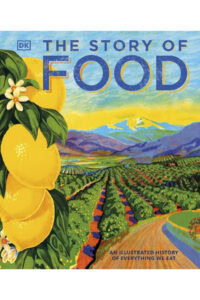
Are you as fascinated by the history of food as I am? I recently borrowed The Story of Food from my local library and have loved dipping into it. It explores the history of much of what we eat—from fruits and vegetables to pulses, spices and herbs.
Back to the Lemon Party
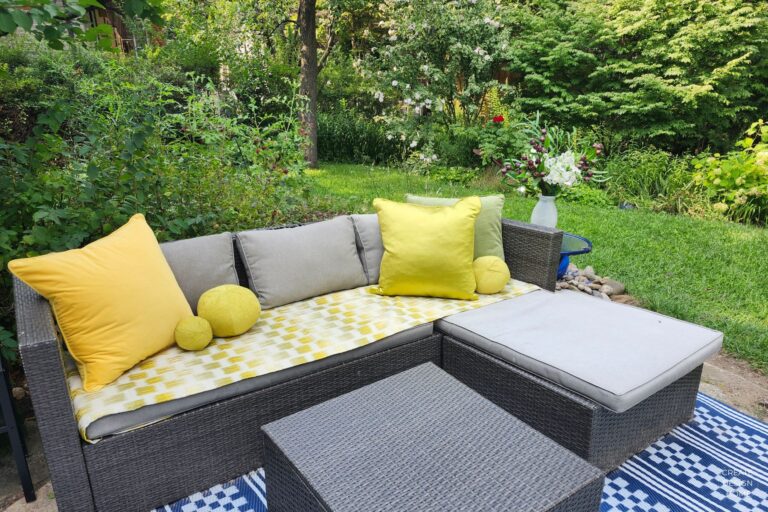
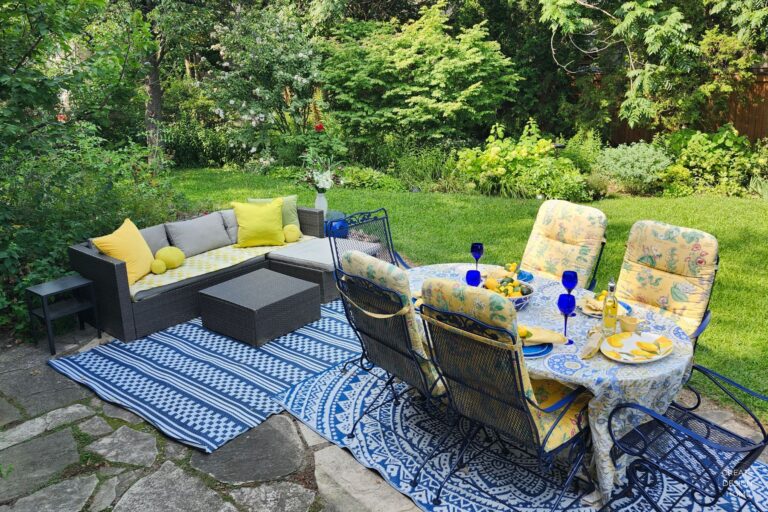
While this summer has been about refreshing the wicker sofa with new cushions, for this dinner I chose to use the old ones and simply covered the seat to bring more colour and pattern to the sofa area. The accent cushions are indoor cushions — two are velvet and one is sateen — so they’re definitely not staying outside! But this is one of those times when you can bring the inside out and have fun with the decorating. I even brought out a few of the little ball cushions I’ve made in a fun yellow-green chartreuse fabric. This colour makes other colours zing! (Yes, zing is absolutely a technical term.)
Decorating Tip:
Repeat one or two colours throughout your outdoor space. I carried the yellows from the chair cushions into the accent pillows and flowers, which helps everything feel intentional rather than random.
Use What You Have (and Love)
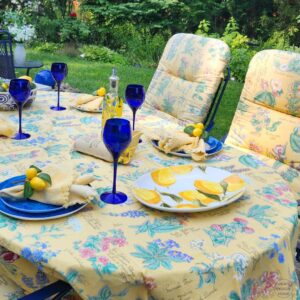
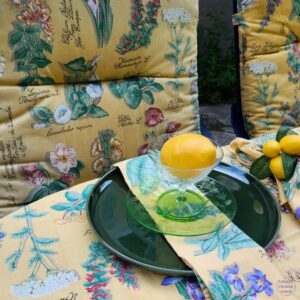
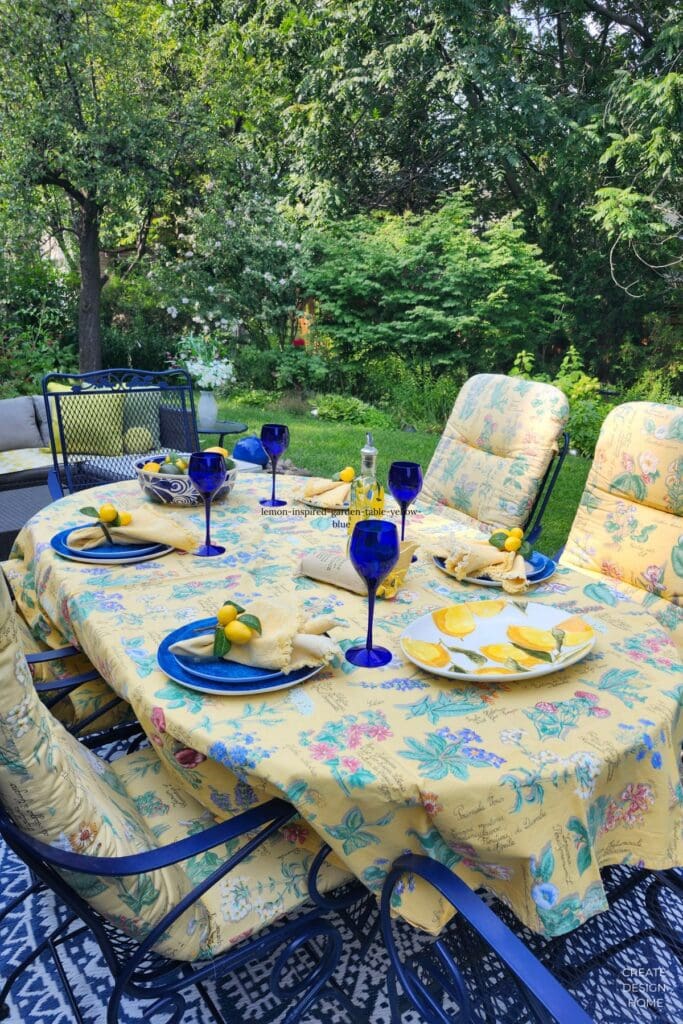
I’m a huge believer in looking at what you already own before heading to the shops. I bought these cushion covers in Holland many, many years ago for garden chairs that I had then. I babied them (bringing them in so they didn’t get wet, or sun-faded.) Unfortunately, after being left outside for a few day, they did eventually fade. I still love them, perhaps even more because they’re now sun-faded.
Serendipity
A few years after buying the cushions, a girlfriend and I were enjoying an afternoon of shopping in The Hague. We stopped at a decorating store. The store had a few rolls of fabric and of course I had to see what they had. At that time I had more fabric than I knew what to do with but as any fabricaholic will tell you – there is never enough. Well, for me, that day, there wasn’t. There was a roll of the same fabric as my cushion covers! Of course I had to buy some – for a matching tablecloth, a smaller tablecloth (you can never have too many), and for napkins. Have I mentioned my napkin fetish? Well, I was over the moon with my purchase!
How to Create a Lemon-Inspired Summer Table
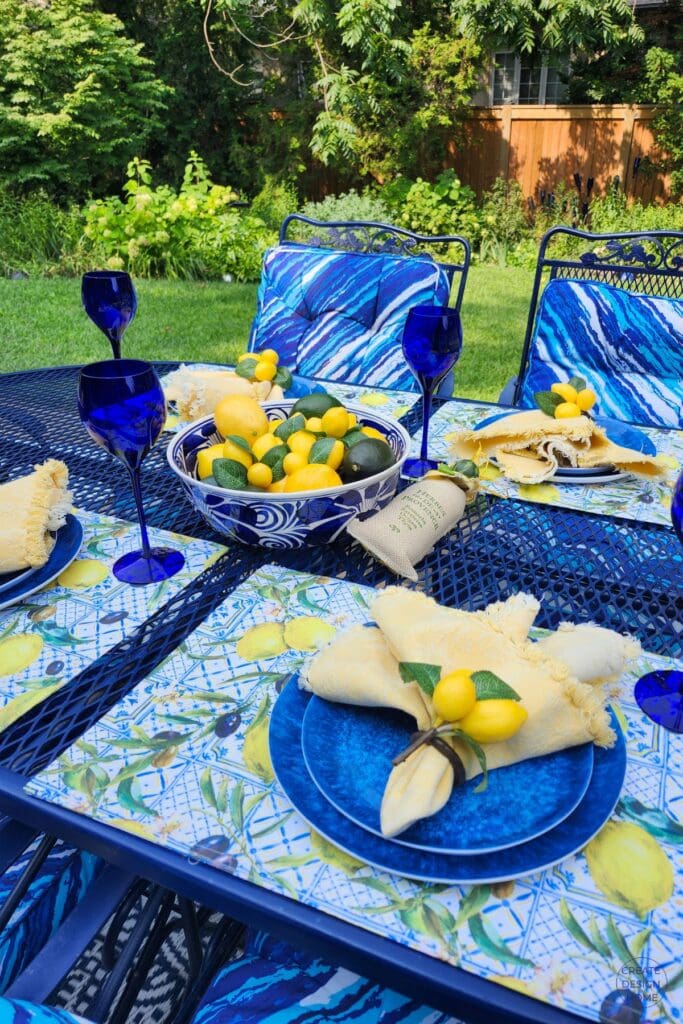
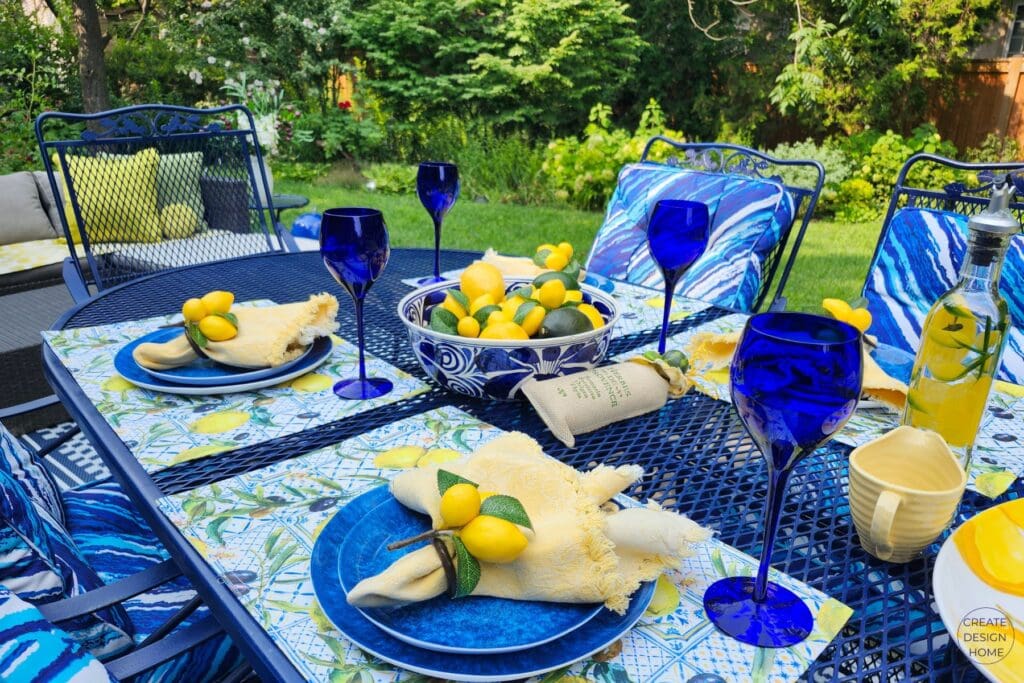
You don’t need lemon-patterned everything to create a lemon-themed table. In fact, I think lemons have more impact when they’re mixed with pieces you already own.
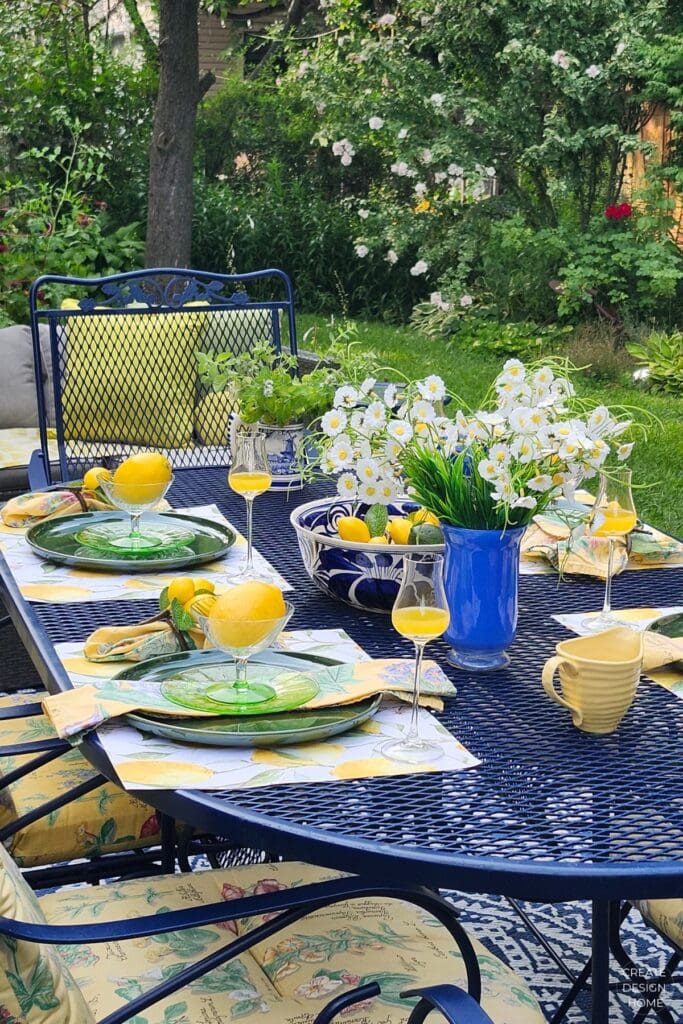
Start with fresh lemons and build your colour palette around them. Blue and white gives the table that wonderful Mediterranean feel, while green brings in the colours of lemon leaves, olive groves and the garden.
Then layer in natural textures and a few simple details — greenery, woven pieces, pottery, glassware, linen or cotton napkins, and perhaps a little yellow repeated around the table.
Accent Pieces
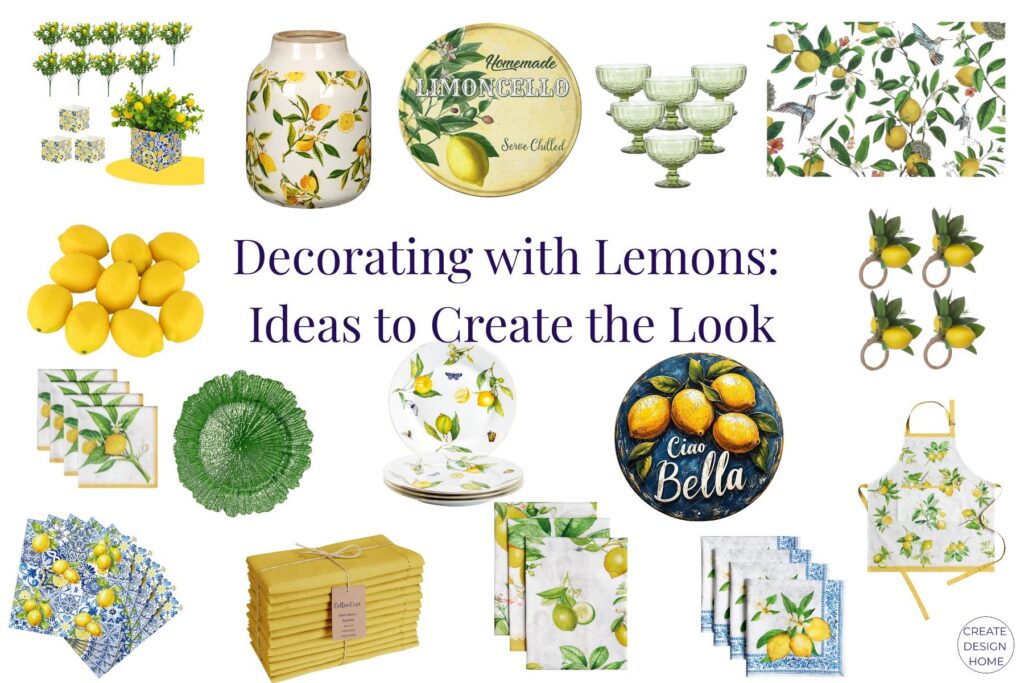
Pieces that work particularly well with lemons: blue-and-white ceramics, cobalt blue glassware, olive branches or other greenery, white flowers, yellow flowers, natural wood, woven placemats, green glass, white dishes, linen napkins, Mediterranean-style pottery and, of course, bowls of fresh lemons.
I created this table almost entirely with things I already owned, but if you’re creating your own lemon-inspired table, I’ve gathered some pieces that would work beautifully with this look.
A Little Bit of Summer Sunshine
What started with a lemon tree in our garden in Cape Town all those years ago has somehow followed me through my life — from lemon-patterned clothes and dishes to a summer table in my own garden.
And perhaps that’s what I love most about decorating for gatherings. It doesn’t have to mean buying everything new. Sometimes the best tables begin with things we’ve collected over the years, a few flowers from the garden, food we enjoy, and one simple idea that ties everything together.
For this dinner, that idea was lemons — and a little bit of Mediterranean sunshine in the garden.
This post contains affiliate links, which means I may earn a small commission if you choose to make a purchase — at no additional cost to you. As an Amazon Associate, I earn from qualifying purchases. All product information is provided by the retailer, and pricing or availability may change at any time.
If you enjoyed this patio makeover, you might also like my English Garden Tea Party and Hydrangea Garden Party and A Simple Summer Garden Refresh posts. It’s the same patio styled three completely different ways, showing how a few thoughtful changes can completely transform the look and feel of an outdoor space. If you want to see the items I used and other ones that are in the same themes visit the Shop Pages: Shop the Look : Hydrangea-Inspired Table and Shop the Look: English Country Garden Tea Party
For more Shop the Look for the Garden Refresh you can click here.