How to Bring Colour into Your Garden — Beyond the Flowers
We tend to think of garden colour as something we plant. But flowers bloom and fade, and there are plenty of other ways to create a colour story outdoors. Choosing one accent colour and repeating it throughout the garden can make separate areas feel connected and intentional.
Start with a Signature Colour
For me, the color of royal or cobalt blue has been a colour I’ve used throughout my life. When I lived in Holland, my store, Window Shopping, had beautiful entry doors in royal blue. Much of my furniture is blue – and, if it isn’t, it’s become blue.
Royal blue works beautifully in the garden. It’s vibrant enough to stand out against both colorful flowers and a sea of green. Cobalt has an intensity that can hold its own against the strong, saturated greens of summer foliage without getting lost.
Strategically placed blue decor leads the eye through the garden, allowing certain areas to be highlighted.
Shape, and Repetition of Colour Lead the Viewer’s Eye
Seeing a garden in one go can be overwhelming. But shape and repetition of colour, and places for the eye to rest help the visitor see all of the elements of the garden, area by area.
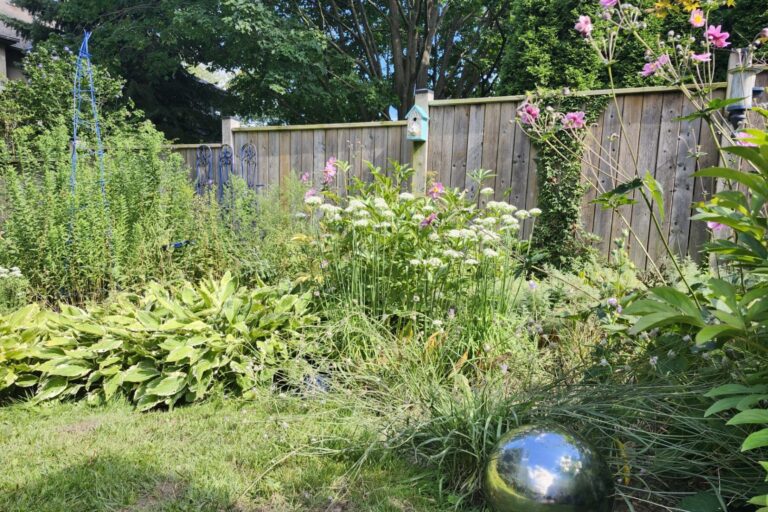
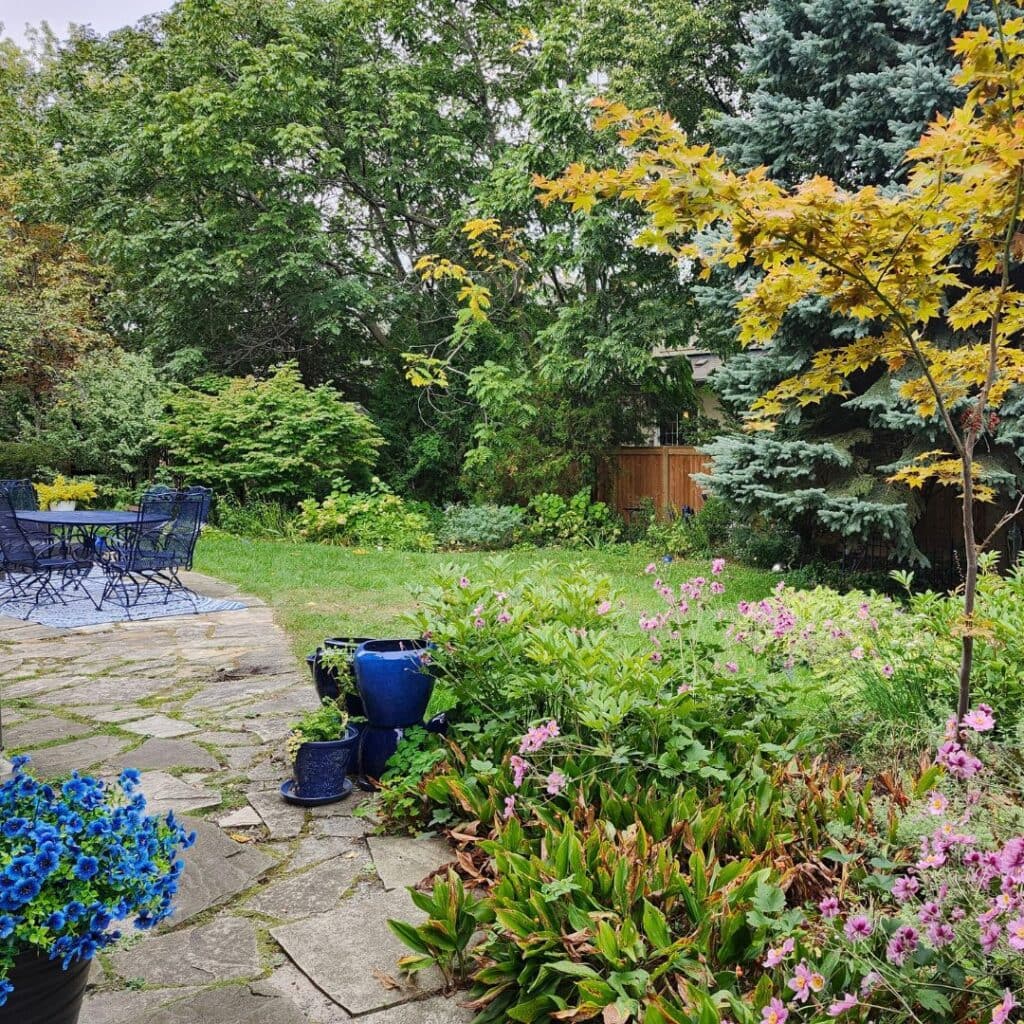
How do I do that? Well, I’ve shaped the garden over the years to have a lot of curves in the structure. The limestone patio is curved; the garden beds are curved. It’s a soft curve as the garden is quite wide. I’ve used plantings such as a row of hostas to help define one section.
Garden Ornaments
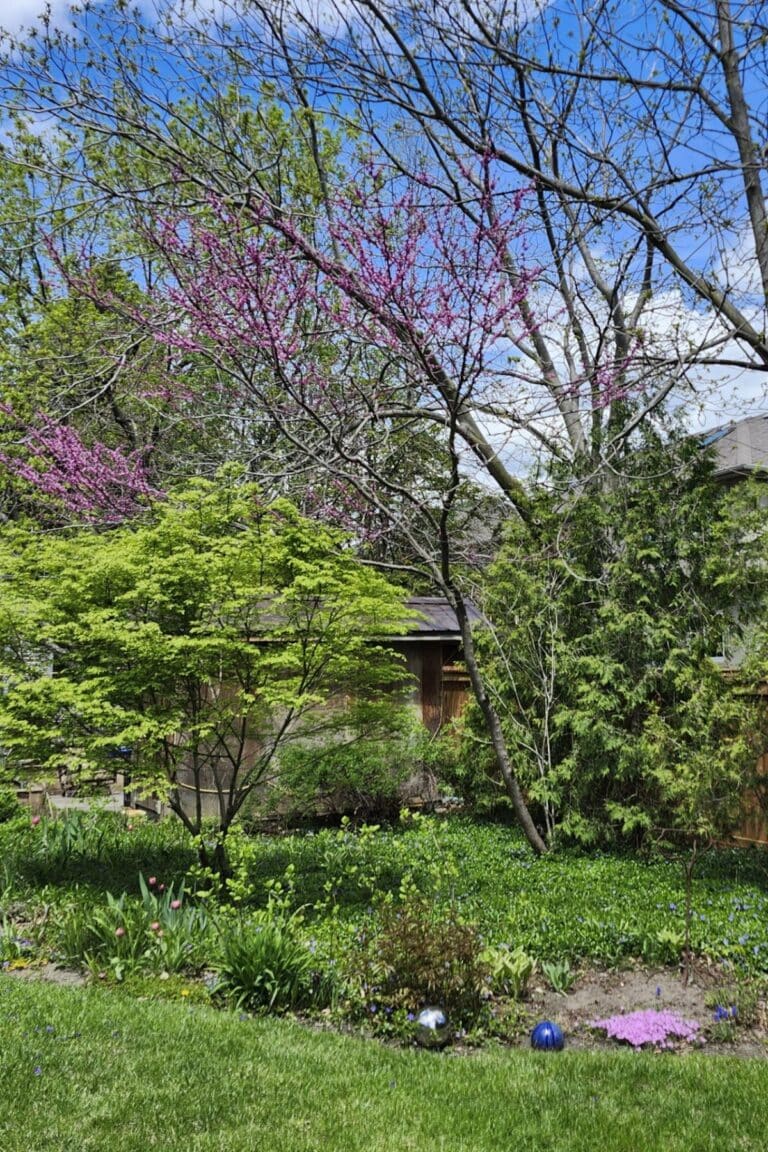
I also use garden ornaments – blue round ceramic sea urchins that I purchased many years ago lead the eye throughout the garden. In early spring this is more apparent as the plants are just starting to show. By fall they are usually hidden.
Use Unexpected Elements
Shiny larger metal balls dot the garden as well – providing a reflective surface and an unexpected element. They are also more visible in the spring and provide interesting structure in the winter when the snow piles on them.
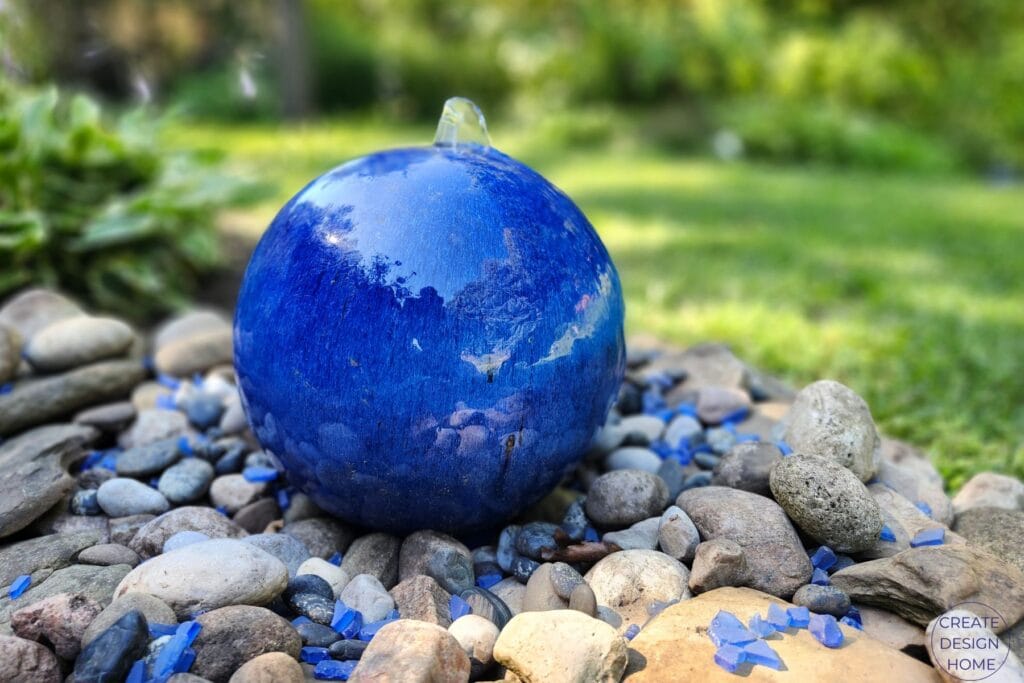
A blue water fountain is a good focal point on the patio – providing the viewer with a vibrant blue ball surrounded by river rocks and an occasional hint of blue through a scattering of blue glass. The water fountain also provides a gentle trickle of water sound which provides another sensory level in the garden.
Repeat Shapes & Colours
This repetition of curves and balls softens the garden, providing a bit of whimsy. I have quite a few ball cushions and round tables in the living room, so the pattern of circles is repeated inside and out.
Add Character with Garden Art and Architectural Pieces
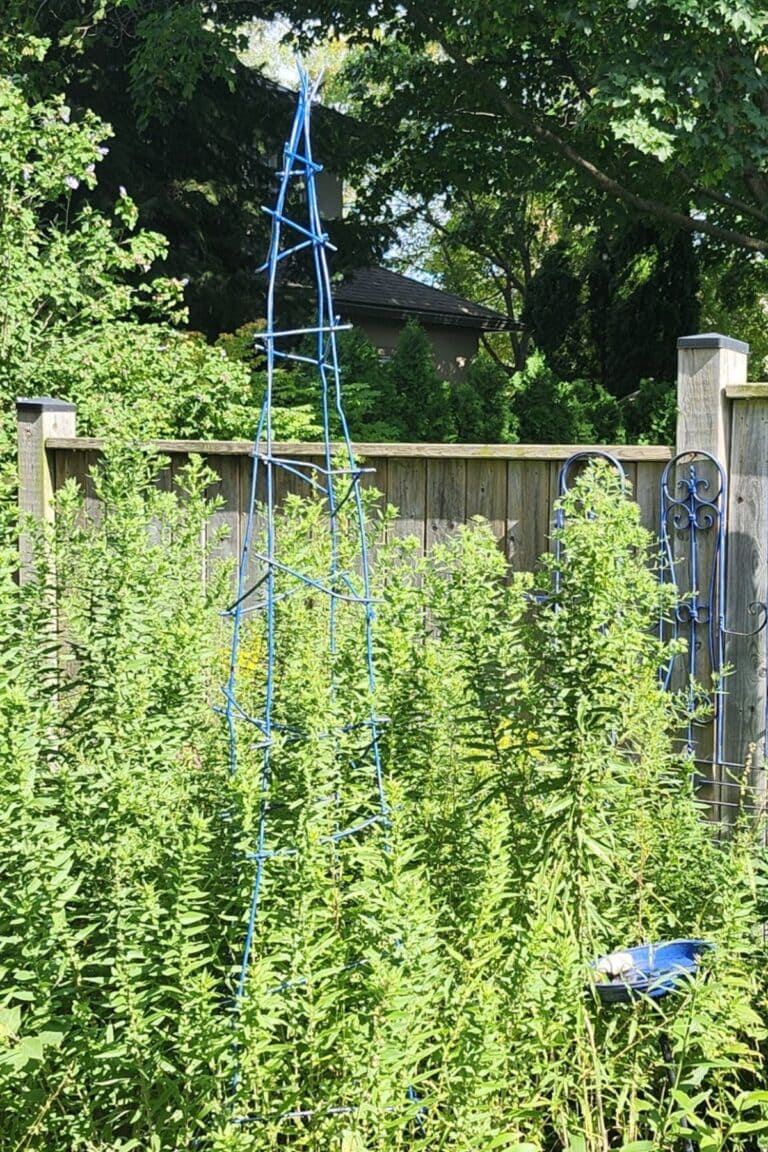
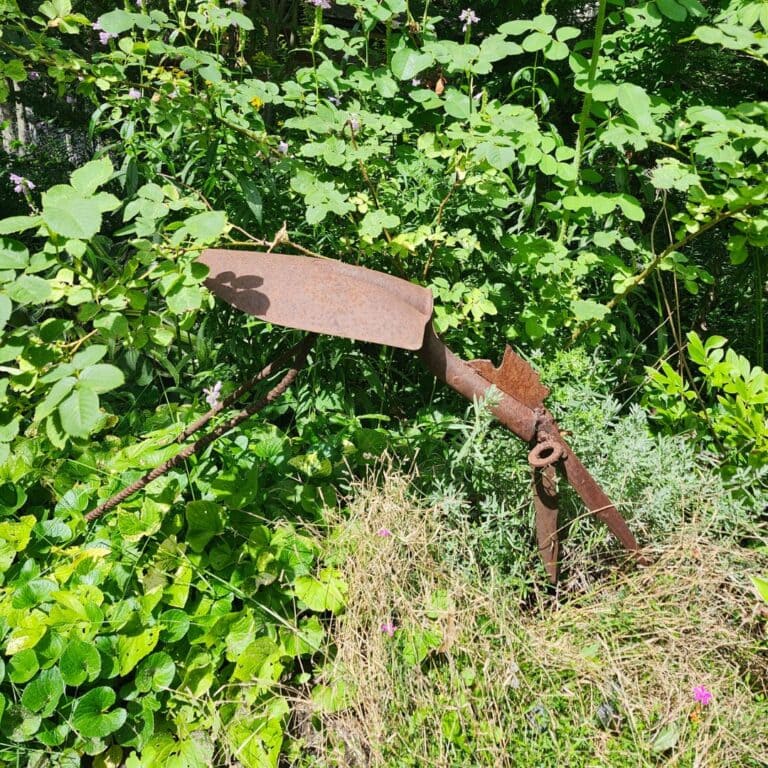
Years ago, I met a man who made garden sculptures out of scrap garden tools. I bought his shovel bird and had him make me a barbed wire obelisk. I have since spray painted it, so it stands out in the garden.
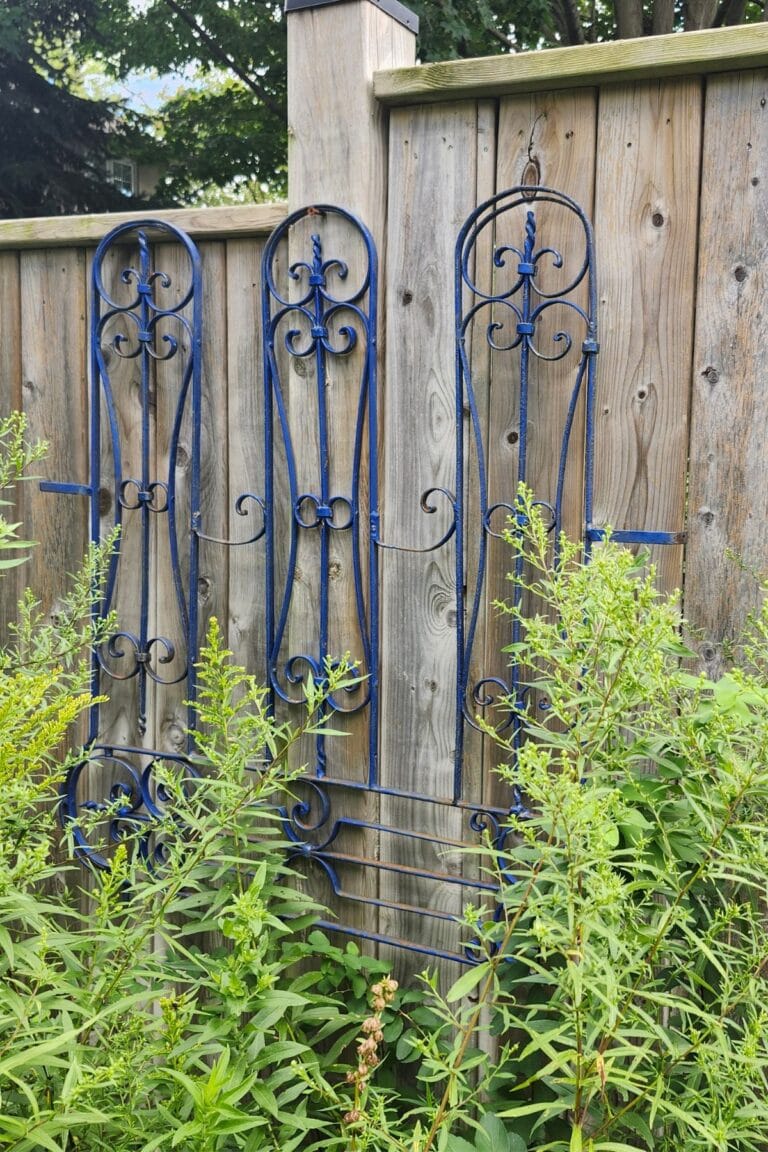
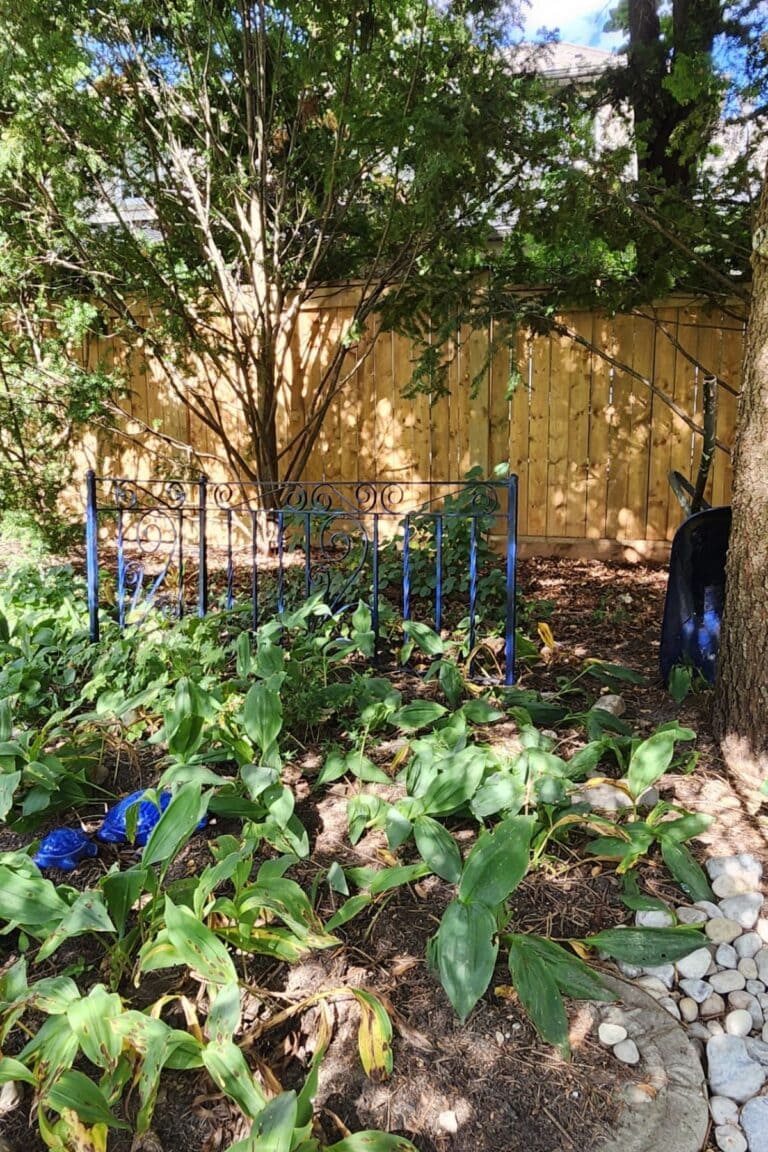
Behind its ruggedness is a lovely piece of decorative balcony railing – I was told it was from Alexandria, Egypt, from a building that was being renovated. Now, I may have been sold a good story, but the story was told after I purchased the railing!
I have since changed out my home’s original stair railing and put some of the remainder in the garden – spray painted of course. Even my wheelbarrow didn’t escape the can of spray paint.
Shades of Blue
Not everything is the same blue. The garden furniture received a navy-blue colour rather than the brightness of the cobalt blue. It becomes more neutral and is more elegant in that color.
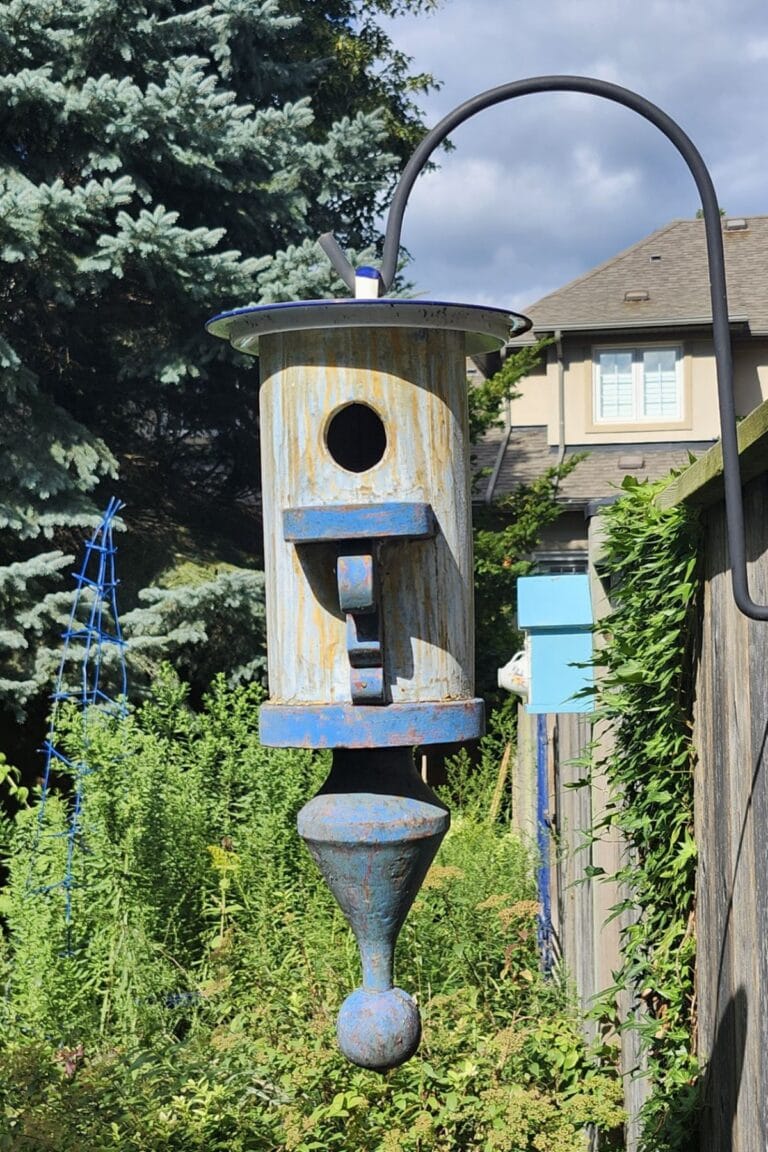
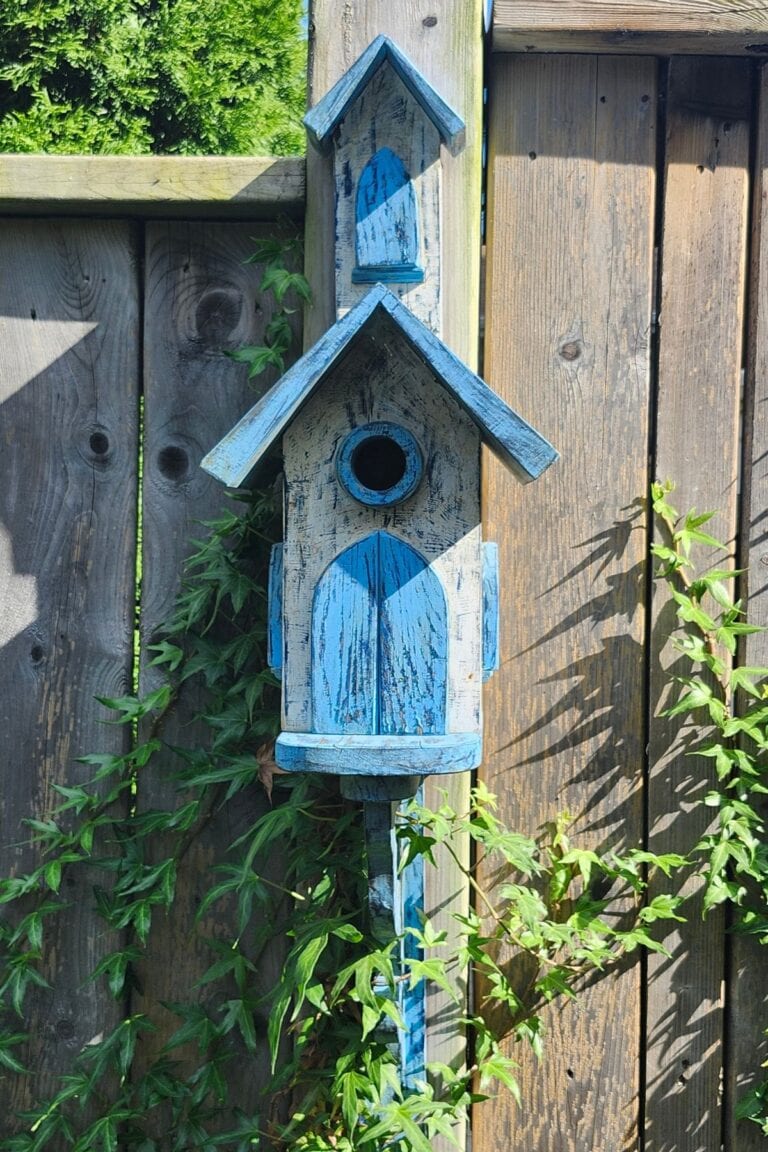
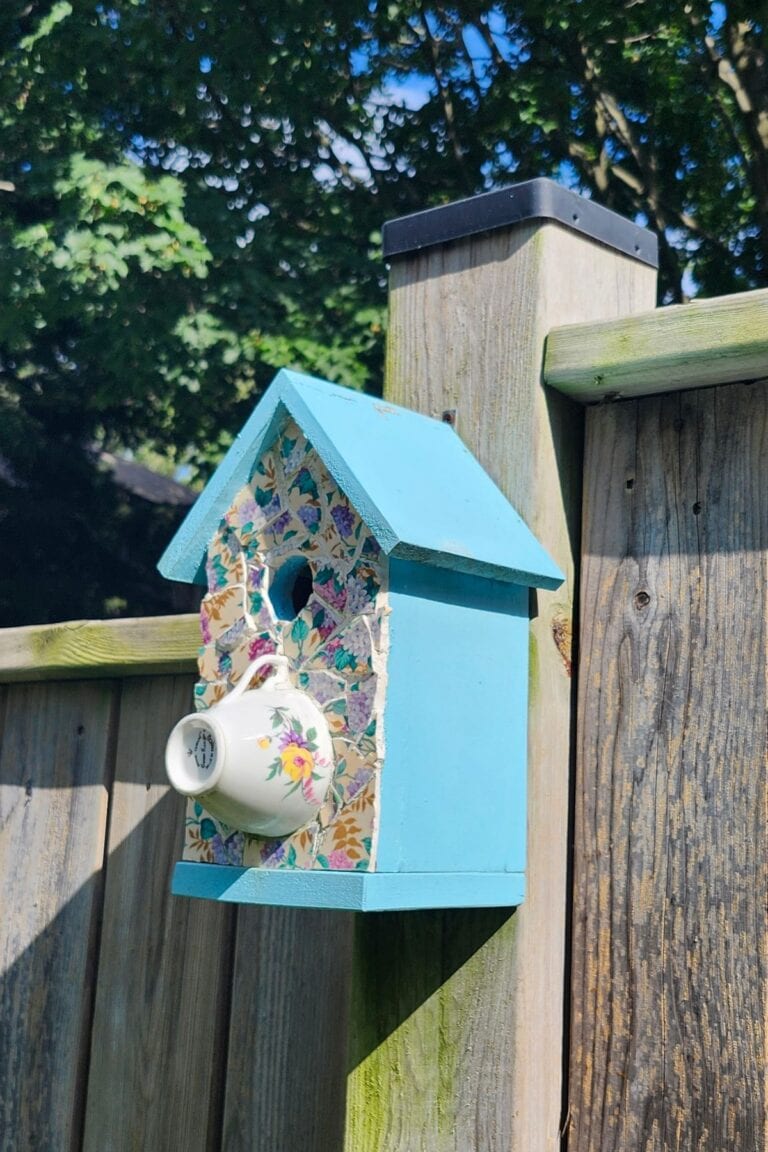
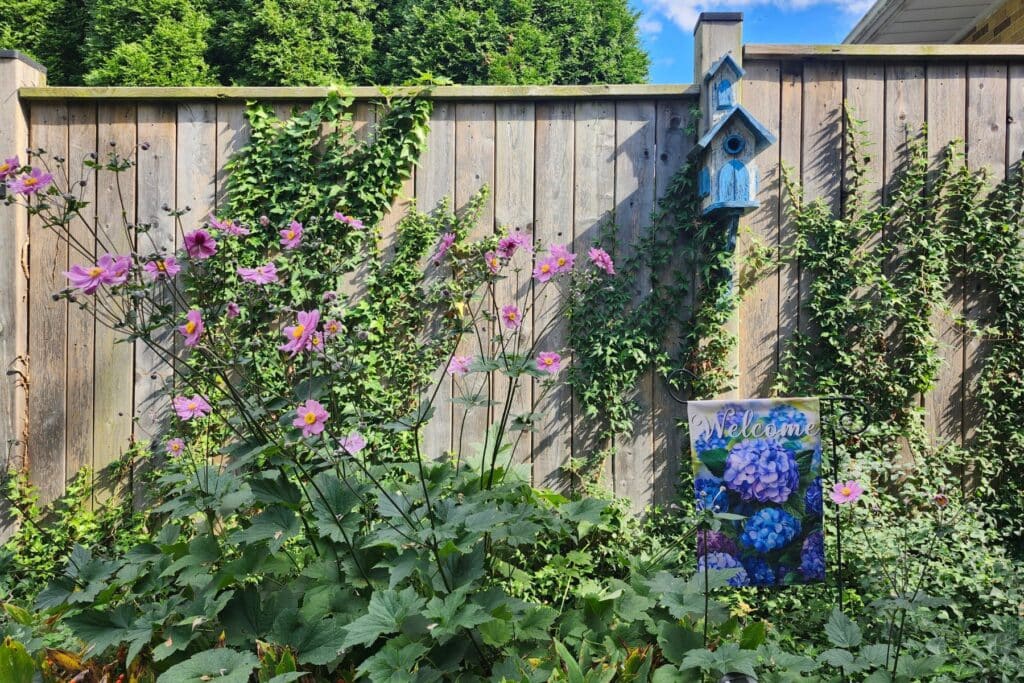
A few little garden ornaments such as decorative hanging bird houses made with old teacups lead the visitor’s eye into the garden. They are lighter shades of blue. A flag with hydrangeas makes the welcome obvious.
Turn Ordinary or Vintage Objects into Colourful Garden Features
It’s no surprise that I love history, collecting antiques, and vintage pieces. I’ve been fascinated by history, how people have lived in their towns, cities, and homes for years. I collect snapshots of that living and use it in my life.
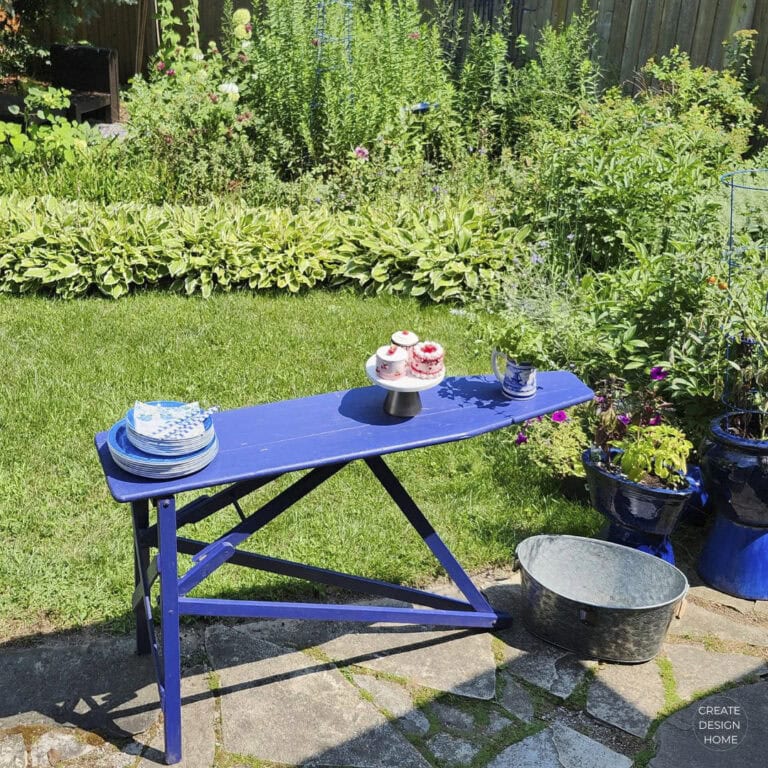
That’s why I was so thrilled to find the antique balcony railing from Alexandria; the vintage garden tools turned into a sculpture. But I didn’t stop there. Many years ago, I was helping someone get their home ready for sale and they were throwing out antique ironing boards. I painted one cobalt (of course) and the other fuchsia. Over the years I found I didn’t need two and in a fit of de-cluttering I gave the fuchsia one away. The blue one comes in handy as an extra area for entertaining.
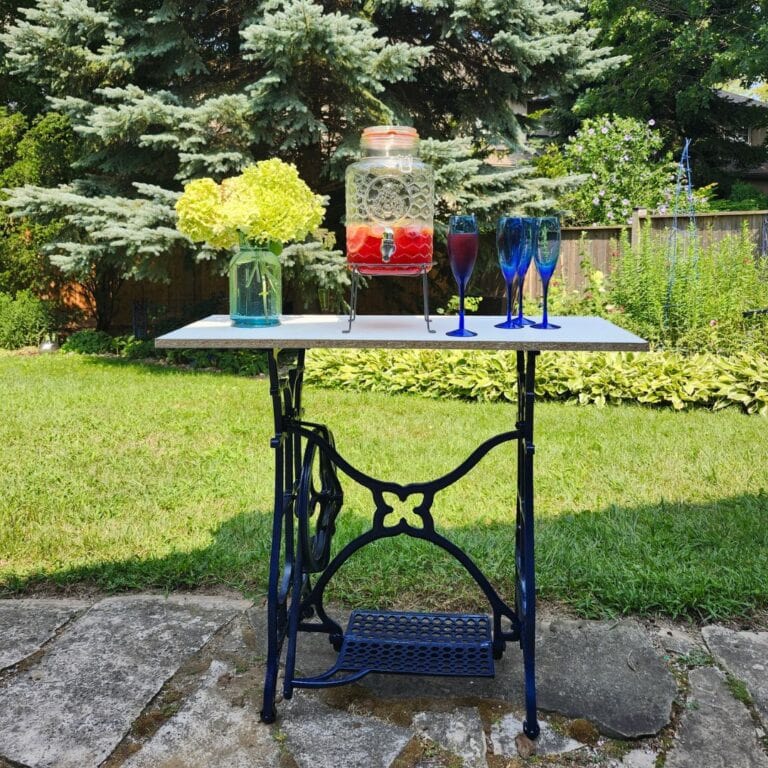
My sister recently gave me an antique sewing machine base. That’s been spraypainted (navy) and pressed into action. For now, it has a piece of wood for a tabletop while I find the perfect tile to create a tabletop – a winter project.
Bring Colour in Through Containers
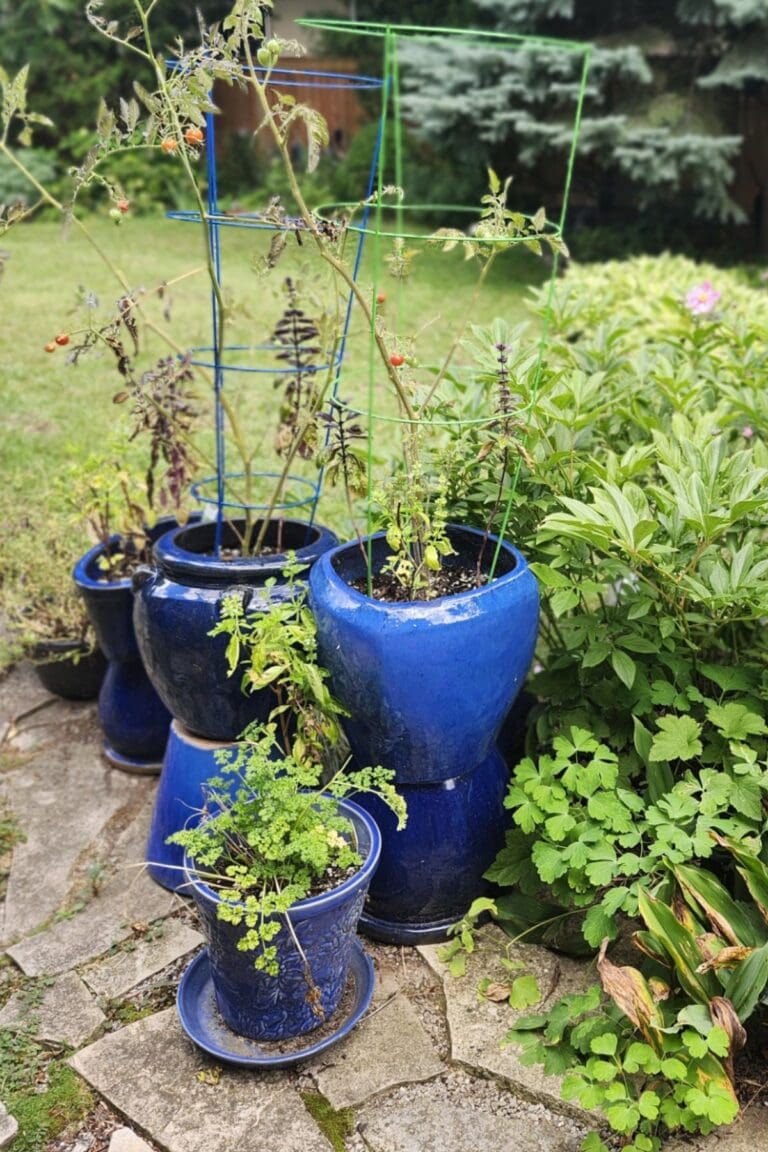
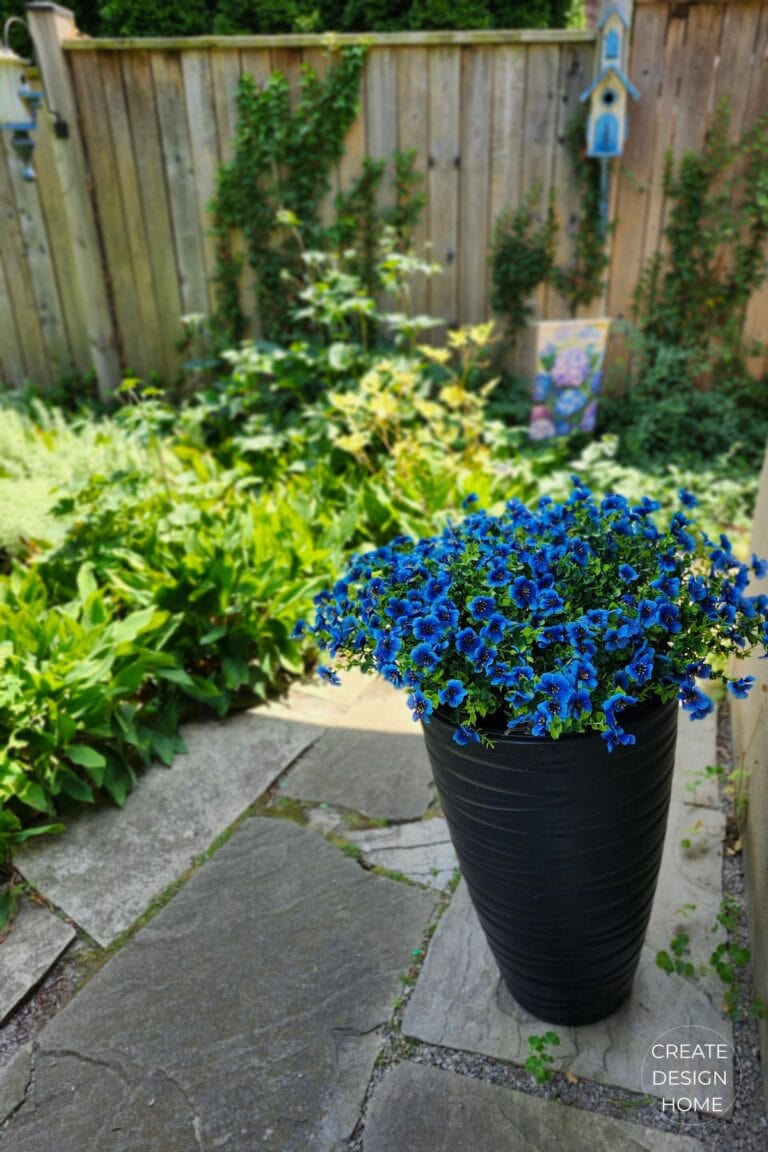
Pots are a great way to bring in colour – blue works well as a foil to most colors – it looks great with red or pink, yellow, green. The vibrancy of blue plays well with the vibrancy of the color above.
Not everything has to be perfect. Our summers are short, intense bursts of colour. To push the season, I’ve used some artificial plants (Quelle horreur! I hear you say but hear me out). They help bring a bit of color to parts of the garden that don’t have much colour. I am picky about my faux flowers – they have to look real and be of good quality.
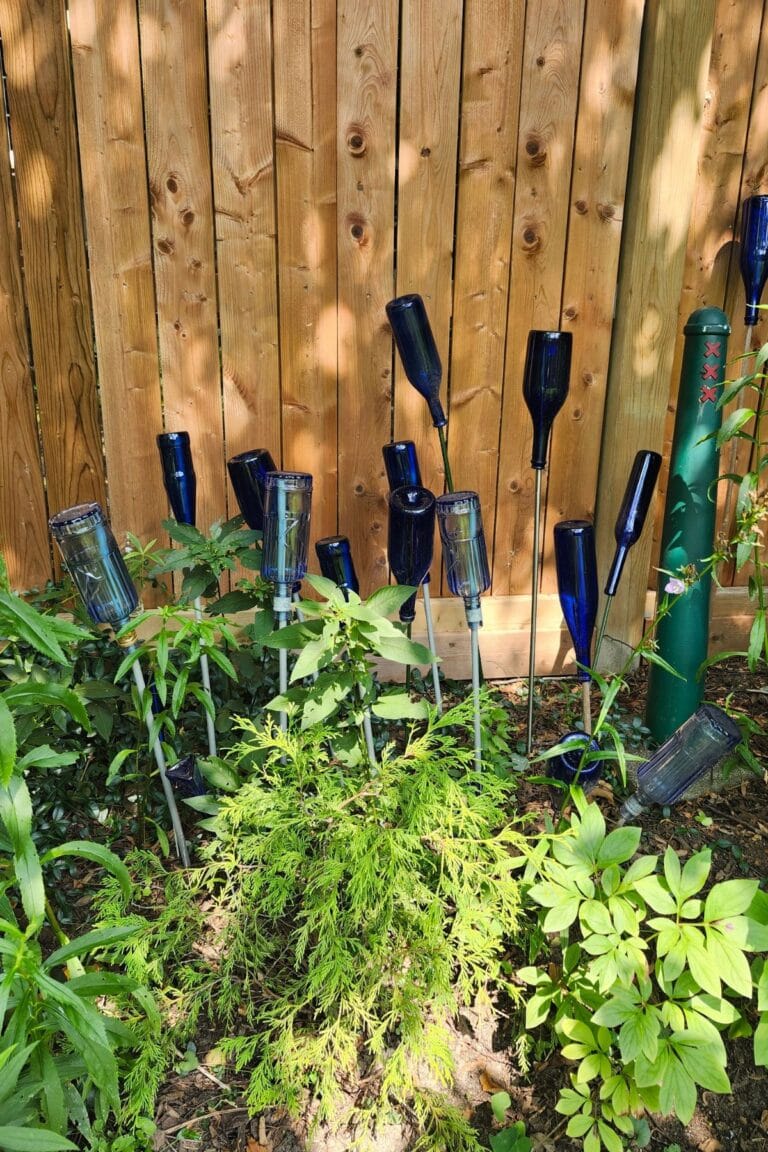
Blue wine bottles, hung upside down on stakes are a whimsical touch and provide a bit of blue and a lot of charm in the winter.
Use Textiles for the Easiest Seasonal Colour
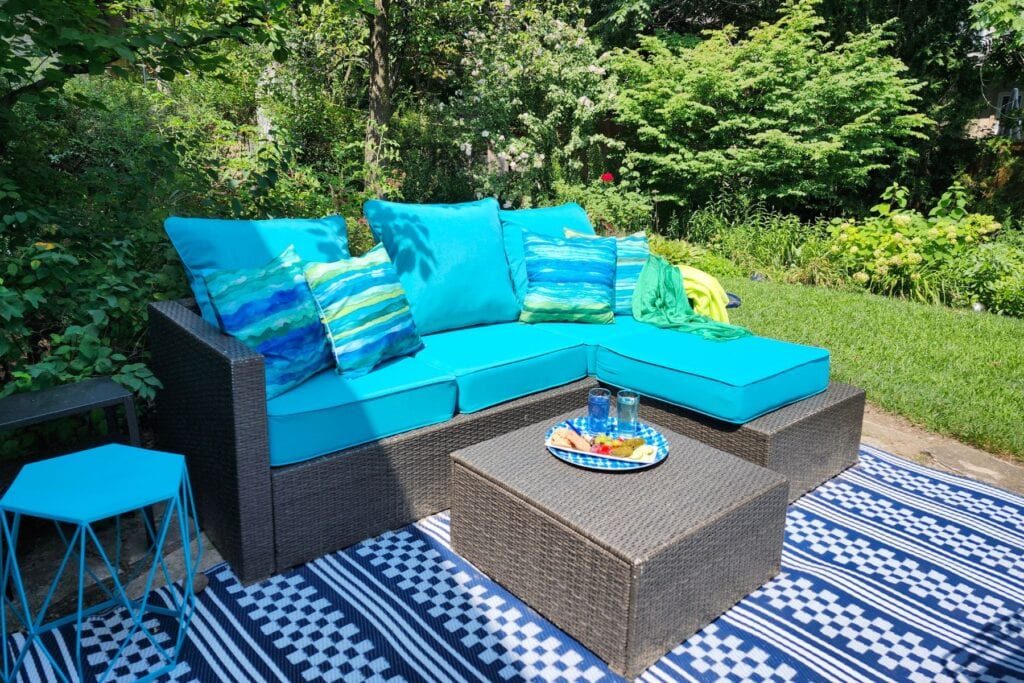
It’s no surprise that garden cushion manufacturers create many colourful exterior cushion options. It’s the fastest, easiest way to bring color into an outdoor space. These days there are many exterior cushion options (with exterior cushion inserts – yes, that’s a thing!) You can mix and match to your heart’s content.
Outdoor rugs are another easy way to bring in colour. Because mine sits directly on the patio area where it gets far more earth and garden debris than it would on a deck or concrete terrace, I’ve found woven polypropylene rugs work best. They’re easy to hose or wipe clean. More tightly woven indoor/outdoor rugs haven’t worked as well for me because the earth becomes embedded in them. When choosing an outdoor rug, think about what will be underneath it — and what’s likely to land on top of it.
All of these are the pieces you can change without committing to them permanently.
Touch up and spray paint
Spray paint is one of the cheapest ways to introduce a strong colour — chairs, benches, small tables, plant stands, etc. I reuse old shower-curtain liners as drop cloths in a well-ventilated work area, and I follow the paint manufacturer’s directions. I do use a topcoat. If the piece is out in natural elements – sun, rain, snow – it will need touch-ups.
Repeat the Colour at Different Heights
I use colour at many different heights – this helps moving the eye around the garden and highlighting different areas. While I initially didn’t set out to do this, I realize that over time colour in the garden has crept in at different heights.
- ground: pots/rugs
- furniture height: cushions/sewing-machine base
- eye level: ornaments/fountain
- vertical: obelisk, bottle stakes, posts, flag
Everything Doesn’t Have to Match
By definition, being out in the garden is more casual. Your outdoor space can be more relaxed. It doesn’t all have to match. In my garden’s case I’ve inherited the table and chairs – not initially my style but it’s grown on me and the chairs are comfortable.
The wicker garden set is also an inherited piece. It’s also very comfortable. This year I made it more mine by buying turquoise cushions to bring more blues into the garden. They’re vintage finds, reused objects, ceramics, textiles, painted architectural pieces and garden structures — but the repetition of blue makes them relate to one another.
Plantings
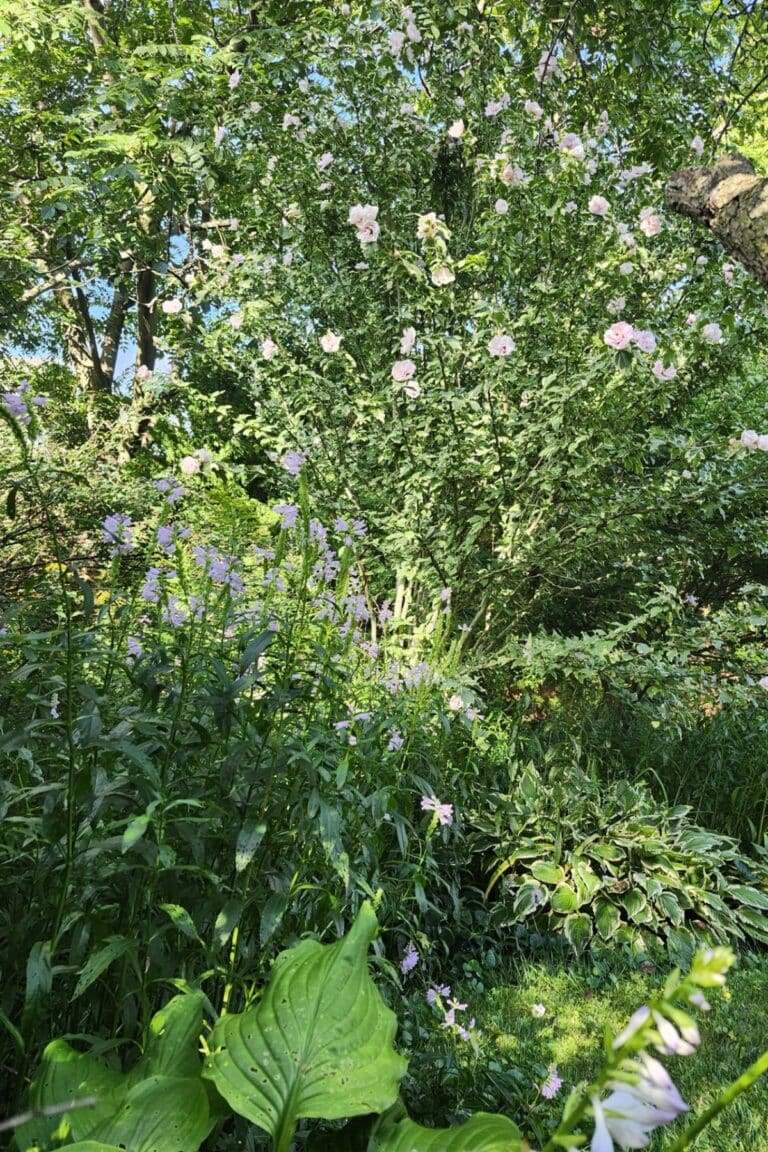
Colour of course comes naturally from the flowers. Over the years I’ve deliberately chosen pinks, blue, purples, and white for the back garden. I do break down and have yellow narcissus (daffodils) in early spring just to have a visual reminder of spring in the back garden. I don’t have many tulips in the back garden – the squirrels have a habit of taking them (yes, I add blood meal, but that doesn’t seem to deter them).
Yes, I do try to repeat colour with plantings.
Have Fun!
A garden is meant to be a place to relax, enjoy nature and play with plants. It doesn’t matter how big or small your garden — or balcony — is. Choose a colour you love, repeat it in unexpected ways, add things that make you smile, and create your own little slice of heaven. See you in the garden!